In this mock draft, I will be focusing on the Winnipeg Jets, and how they could transform their prospect pool in the 2026 NHL draft. Winnipeg has a total of 7 picks in the upcoming draft, with two of those picks being 7th round picks. and they have no 2nd round pick. Winnipeg Jets are a team try to move veteran players like Connor Hellebuyck and Josh Morrissey in order to get prospects and picks back to retool and get younger.

Related: Seattle Kraken
Trades:
Before the 2026 Draft, the Winnipeg Jets trade star Goalie Connor Hellebuyck to the Florida Panthers for Mackie Samoskevich, Linus Eriksson, the 9th overall pick in the 2026 Draft, and a 2027 or 2028 1st round pick (Panthers choice). This is a win-win trade for both teams as the Panthers solve their goalie issues, while the Jets officially start their rebuild phase, and add two very good young players, and two 1st round picks. With this trade, Winnipeg would now have the 8th and 9th overall picks in the 2026 draft.
Josh Morrissey is trade to Philadelphia Flyers for Ty Foerster, Oliver Bonk, and the 21st overall pick in the 2026 draft. Morrissey gives the Flyers a true top pair defenseman to pair with Travis Sanheim, while the Jets get a young top 6 forward in Ty Foerster, a stud young defenseman in Oliver Bonk, and the 21st overall pick in the 2026 Draft.

8-Daxon Rudolph (D) Prince Albert (WHL)
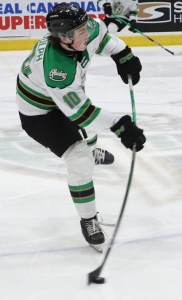
Daxon Rudolph represents a home-run, seamless fit for the Winnipeg Jets at the No. 8 overall pick in the 2026 NHL Entry Draft. The 6-foot-3, 205-pound, right-shot defenseman enjoyed an absolute breakout campaign for the Prince Albert Raiders in the WHL, registering a staggering 78 points (28 goals, 50 assists) in 68 regular-season games, followed by 27 playoff points. Following a highly successful meeting with Jets management at the NHL Scouting Combine, Rudolph has firmly cemented himself as Winnipeg’s dream draft target. The Jets’ most glaring long-term organizational weakness is a lack of high-end, right-handed defensemen. Rudolph brings elite size, premium offensive capability, and shoots right. He is widely viewed as the highest-IQ puck distributor among defensemen in the 2026 class. He possesses effortless blue-line lateral walking and precise playmaking vision, projecting as a future 1st-unit NHL power-play engine. Unlike a pure, small offensive specialist, Rudolph possesses a thick, solid 205-pound frame that allows him to execute reverse hits and break up cycles. NHL Central Scouting, which ranks him No. 5 among all North American skaters, heavily praises his composure. He rarely panics under pressure, using stick checks and calculated gap control to trigger immediate zone breakouts. Rudolph is committed to play collegiate hockey for the University of Denver for the 2026–27 season. This NCAA environment is optimal for the Jets; it gives him 1 to 2 years to completely iron out his in-zone defensive footwork against older competition while Winnipeg manages its current roster transition. Rudolph is a consensus top-10 selection, with major outlets like Elite Prospects ranking him at No. 7 overall. If the Calgary Flames (No. 6) or Seattle Kraken (No. 7) pass on him, the Jets are heavily rumored to be ready to sprint to the podium to secure their blue-line cornerstone of the future.
9-Oliver Suvanto (C)- Tappara (Liiga)
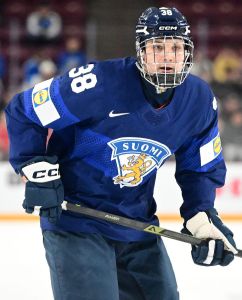
As a result of the Connor Hellebucyk trade, the Jets now own the 9th pick in the draft, with this pick they select Oliver Suvanto. Selecting Oliver Suvanto in the 2026 NHL Entry Draft would provide the Winnipeg Jets with a dynamic identity shift, injecting a rare blend of massive size, professional hockey maturity, and elite defensive structure down the middle. Ranked as the No. 3 European skater by NHL Central Scouting, Suvanto is a towering 6-foot-3, 209-pound centerman who just spent the season playing against grown men for Tappara in Finland’s top professional league (Liiga). He is widely considered the premier shutdown forward in the entire 2026 draft class. The Jets have built team identity on a demanding, heavy brand of hockey. Suvanto is a physical force who uses his massive frame to completely dominate wall cycles, protect the puck with one hand, and win grueling board battles. Suvanto’s style of play perfectly mirrors Jets captain Adam Lowry. He operates with advanced defensive positioning, plays like a third defenseman below his own goal line, and uses his exceptional 79.3-inch wingspan to suffocate opposing plays. Suvanto accomplished the rare feat of skipping Tappara’s U20 junior system to play 48 games in Liiga full-time. He posted 11 points and a +3 rating while helping backstop Tappara to a Liiga championship. Scouts describe him as a coach’s dream due to his sophisticated spatial awareness. He is already a high-end penalty killer and a highly efficient faceoff weapon, leveraging his raw strength to win clean leverage inside the dot. Because the Jets hold the No. 8 and 9th overall pick, selecting Suvanto there makes sense, after selecting Daxon Rudolph with the 8th overall pick, thereby improving
two positions in the first round.
21- Xavier Villeneuve (D) Blainville-Boisbriand (QMJHL)
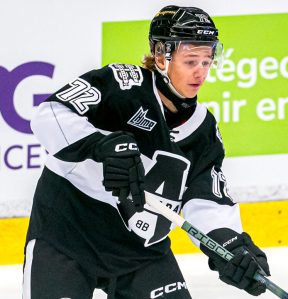
With the 1st round pick acquired from the Josh Morrissey trade, the Jets acquire Dynamic blueliner Xavier Villeneuve. The 5-foot-11, 163-pound left-shot defenseman out of the QMJHL is the most electrifying, elite blue-line manipulator in the draft. While his position on consensus boards heavily varies due to his size—ranging from Elite Prospects at No. 13 to TSN’s Craig Button at No. 39—he projects as a dynamic, high-upside point producer. While the Jets would lock up their right-shot cornerstone in Daxon Rudolph at No. 8, Villeneuve provides the perfect, high-octane offensive equivalent on the left side. Selecting both Rudolph and Villeneuve would give Winnipeg an entirely revamped, modern transition identity. Opposing forecheckers would no longer be able to key in on a single breakout lane, as both pairings would possess elite puck-moving capability. Villeneuve won the Emile Bouchard Trophy as the QMJHL’s best defenseman by dominating the offensive zone. He utilizes shifty lateral edgework and deceptive shoulder fakes to effortlessly walk the blue line. He averaged a point-per-game pace with the Blainville-Boisbriand Armada before putting up 14 points in 17 playoff games. He possesses the exact type of creative, game-breaking vision needed to replace Morrissey’s lost offensive output. The biggest knock on Villeneuve is his lack of physical strength and defensive gap control. However, he is committed to play collegiate hockey for Boston University for the 2026–27 season. Front offices are explicitly drawing comparisons between Villeneuve and Montreal Canadiens star Lane Hutson due to their identical size, shifty skating, and collegiate choice. A rebuilding Jets team could patiently allow Villeneuve to spend 2 to 3 years in the NCAA bulking up, completely aligning with a patient, long-term timeline. Using a top-10 choice on Villeneuve would be a risky reach. However, if the Jets hold an extra late first-round swing via a rebuild trade, taking a flyer on his top-tier puck skill is the exact type of high-reward gamble a rebuilding franchise should make.
71- Brady Knowling (G)- USNTDP (USHL)
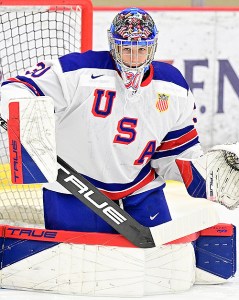
After trading away Connor Hellebuyck, the Winnipeg Jets need to draft and develop their goalie of the future; they net one here in the 3rd round in Brady Knowling. As the No. 1 ranked North American goaltender by NHL Central Scouting, Knowling represents the ideal developmental pillar for a post-Hellebuyck era. A combination of stylistic inheritance and timeline synergy makes him a perfect match for Winnipeg. Standing at 6-foot-5 and 205 pounds, Knowling naturally commands the net just like Hellebuyck (6’4″, 215 lbs). Scouts explicitly draw “Hellebuyck lite” comparisons due to his ability to challenge shooters at the top of his crease and naturally block out angles using sheer size. During his season with the U.S. National Team Development Program (NTDP), Knowling routinely played behind an incredibly loose defense that gave up a league-high in goals. Facing a high volume of dangerous rubber forced him to develop high-end positional poise, mirroring the exact workload environment Hellebuyck has managed in Winnipeg for a decade. Trading Hellebuyck signals a massive organizational reset. Because goaltenders require an extended timeline to mature, Knowling’s commitment to Boston University provides the Jets with an insulated 3-to-4 year NCAA developmental pathway. The Jets can let Knowling master his positioning and iron out flaws—such as passive hands and weak low-pad seals—against elite college hockey competition while the NHL roster undergoes its rebuild. Because the NHL trade market routinely values goaltenders lower on draft day than skaters, the Jets wouldn’t have to waste their 1st round picks to secure him. With an average Consolidated Draft Ranking sitting at No. 72 overall, Winnipeg can use their natural third-round draft capital to secure a prospect with genuine top-tier, NHL-starter upside. By moving Hellebuyck for an elite, futures-heavy haul of assets, the Jets could pivot their immediate crease duties to a capable bridge veteran. Meanwhile, selecting Knowling allows Winnipeg to quietly construct the physical framework of their next franchise netminder for the exact moment the rebuilding window swings back open.
116-Parker Trottier (W/C) USNTDP (USHL)
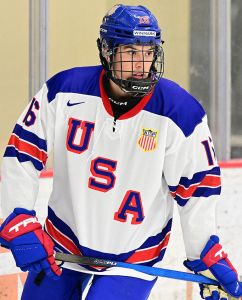
Targeting Parker Trottier in the late 3rd or 4th round of the 2026 NHL Entry Draft aligns flawlessly with the Winnipeg Jets’ long-standing organizational philosophy of drafting heavy, hard-nosed players with elite hockey pedigree. As the grandson of six-time Stanley Cup champion and Hockey Hall of Famer Bryan Trottier, Parker understands the professional lifestyle, high-pressure environments, and standard of excellence required to win at the highest level. Ranked as the No. 79 North American skater by NHL Central Scouting, the 6-foot-1, 185-pound power winger brings the exact type of physical, high-energy package that thrives in the Central Division. If the Jets enter a full-scale rebuild, Trottier provides a foundational building block for their future bottom-six forward group. The Jets have built their competitive culture on being an incredibly difficult, physical team to play against. Trottier is widely regarded as the toughest, most aggressive forward on the U.S. National Team Development Program (NTDP) roster. He plays a heavy, direct, north-south game. He excel at hunting down loose pucks, finishing punishing checks along the wall, and racking up 74 penalty minutes by separating opponents from the puck. While Trottier projects primarily as a checking-line winger, his puck game features a highly dangerous weapon: an exceptional, lightning-quick shot release. This tool allowed him to score 8 goals in just 24 USHL appearances. He is highly effective at supporting the rush, establishing net-front presence, and working off his linemates to win possession below the dots. Trottier famously captained Team USA to a gold medal at the Winter Youth Olympic Games. He brings proven leadership, structured defensive awareness, and an elite work ethic to the dressing room. Trottier is committed to play collegiate hockey for the University of Notre Dame. This collegiate environment provides a rebuilding Jets team with a patient, 3-to-4 year developmental runway. Winnipeg would not need to rush his development or burn a high draft pick. They can comfortably draft him using mid-to-late round draft capital and let him naturally bulk up and refine his playmaking game against older NCAA competition.
135- Samuel Eriksson (D) Farjestad BK U20 (U20 Nationell)
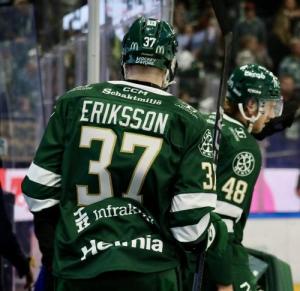
Drafting Samuel Eriksson would give the Winnipeg Jets an elite, physical shutdown presence to anchor the left side of their future defensive corps. Ranked as the No. 31 European skater by NHL Central Scouting, the 6-foot-5, 212-pound Swedish blueliner is a specialized defensive weapon. While he lacks offensive flash, his specific toolkit makes him an ideal late-round target for a rebuilding Jets franchise. Winnipeg already selected Daxon Rudolph to be the future #1 defenseman, but he needs a D partner; that is where Samuel Eriksson steps in and will be the perfect stay at home defensive anchor to clear space for him. Eriksson operates with a strict, defense-first mindset. His presence on the left side would act as a safety net, allowing an elite puck-mover like Rudolph the total freedom to lead transitions and activate deep into the offensive zone. The Jets’ historic identity was built on being an incredibly heavy, mean team that opponents hated to play against. Eriksson brings that exact element to the blue line, using his massive frame and high-leverage strength to ruthlessly clear opponents out of the crease. He boasts a massive reach that allows him to break up cross-crease passes and suffocate zone entries along the wall. Scouts heavily praise his high panic threshold when pinned deep under heavy forechecks. Because he recorded just 6 points in 32 games for the Färjestad BK junior team, public draft boards heavily vary on his value. The Jets do not need to burn high-end capital on him. Eriksson is expected to be available in the 3rd to 5th-round range, making him the exact type of low-risk depth flyer a rebuilding team should stack in their pipeline. Because the Jets would be entering a patient, multi-year rebuild following trades of veterans like Josh Morrissey, they have no reason to rush prospects. The Jets can draft Eriksson and let him develop in Sweden’s professional ranks for 3 to 4 years to completely iron out his four-way skating agility before bringing him over to North America.
167-Martin Psohlavec (G) Energie Karlovy Vary HC U20 (Czechia U20)
199-Sawyer Dingman (LW) Swift Current Broncos (WHL)
220-Eddy Doyle (D) Halifax Mooseheads (QMJHL)
Draft Summary
8- Daxon Rudolph (D)
9- Oliver Suvanto (C)
21-Xavier Villeneuve (D)
71- Brady Knowling
116- Parker Trottier (W/C)
135- Samuel Eriksson (D)
167- Martin Psohlavc (G)
199- Sawyer Dingman (LW)
220- Eddie Doyle (D)