Several top prospects are opting for NCAA programs over traditional junior leagues, raising questions about game volume, competition level, and long-term development impact.
Let’s unpack the Development Path Disruption theme in the 2026 NHL Draft—it’s one of the most fascinating shifts in recent years, and it’s reshaping how scouts evaluate upside, readiness, and risk.

Related: THE SIZE VS SKILL DEBATE: 2026 EDITION
NCAA VS CHL: A STRATEGIC PIVOT
Gavin McKenna’s move to Penn State—bypassing the WHL—signals a growing trend where elite prospects choose NCAA programs over the CHL. NCAA prospects have a longer runway, more time to physically mature before turning pro. NCAA systems emphasize structure and responsibility. Academic and lifestyle balance of the NCAA appeals to families and agents seeking holistic development. NCAA players typically play fewer games (35–40 vs. 60+ in CHL), raising concerns about exposure to high-pressure scenarios, Consistency and durability, Scouting sample size. Yet, some argue this lower volume allows for more focused skill development, better recovery, and less wear-and-tear. Gavin McKenna and Keaton Verhoeff, two of the top prospects in the 2026 Draft are opting for the U.S. college route, emphasizing tactical maturity, physical development, and academic balance.
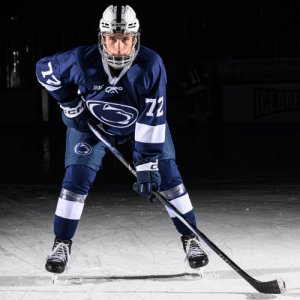
Top prospects like Ryan Roonbroeck, Ethan Belchetz, Mathis Preston, and Ryan Lin chose to develop their skills in Canada’s major junior leagues, offering high game volume and intense competition. The CHL 60+ game schedule helps prepare players for the NHL’s longer schedule, Earlier exposure to NHL-style pace and physicality, and has a strong track record of producing top picks. NCAA prospects may be less scouted in volume, but offer longer development arcs. CHL remains dominant in producing battle-tested, high-output players, especially forwards. Scouts must now contextualize stats and traits across vastly different environments.


EUROPEAN MODELS GAINING GROUND
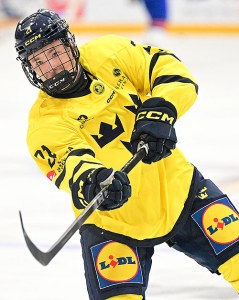
Swedish and Finnish prospects continue to thrive in tiered development systems, often playing against older competition while training with pro clubs. Viggo Björck dominated in Sweden’s J18 circuit and is now transitioning to J20 and SHL exposure. Sweden (J18 → J20 → SHL) and Finland (U18 → U20 → Liiga) allow prospects to play against age peers in junior leagues; train with pro clubs and occasionally get SHL/Liiga minutes, develop tactically and physically without overexposure; this creates a gradual ramp to pro readiness, often with better puck habits and spatial awareness. Swedish Standouts include Viggo Bjorck and Ivar Stenberg, two of the top prospects in the 2026 Draft. Many prospects train with SHL/Liiga clubs even while playing junior, European systems emphasize structure, puck support, and off-puck reads. European leagues played fewer games, more training, better recovery; Youth Olympics, Hlinka Gretzky, and U18 Worlds showcase their readiness. European prospects often peak later, making early rankings volatile. Teams with strong Euro scouting (e.g., Detroit, Ottawa, Carolina) may
lean into these models for value picks.
USNTDP & Hybrid Paths
The U.S. National Team Development Program (based in Plymouth, Michigan) develops top American U17 and U18 players through Intense domestic competition (USHL, NCAA exhibitions), International tournaments (Hlinka Gretzky, U18 Worlds), and Structured development with elite coaching and analytics. Players typically commit to NCAA programs post-USNTDP, creating a hybrid path: high-end junior exposure followed by college refinement. The U.S. National Team Development Program (USNTDP) remains a hybrid model—high-end competition, international exposure, and NCAA transition. Players like James Hagens, Adam Kleber and Cole Eiserman are
navigating this route, balancing showcase events with long-term NCAA commitments. These players are battle-tested against NCAA teams and international foes before entering college, often arriving more NHL-ready than traditional NCAA freshmen. Scouts must now contextualize stats and traits across wildly different environments A 60-point WHL season vs. a 30-point NCAA season might reflect similar upside. Defensive reliability in NCAA may outshine flashy CHL production.
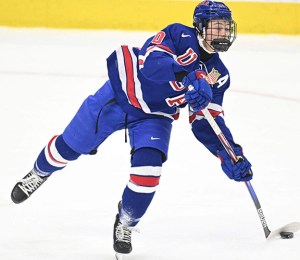
Some prospects blend USNTDP exposure with other leagues; players like Trevor Connelly (Tri-City Storm) bypass USNTDP but follow a similar NCAA-bound arc. Some players transition from elite prep programs (e.g., Shattuck-St. Mary’s) into USHL before college. USNTDP emphasizes systems, video breakdown, and situational awareness, frequent exposure to European styles and pressure games. Strength and conditioning programs rival pro setups. Scouts value USNTDP players for their predictable development arcs and high ceiling. Hybrid paths require contextual stat analysis—a 40-point USHL season may outshine a 70-point CHL campaign in terms of translatable traits.



 HockeywizScouts